Delivery regions
Russia, Armenia, Belarus, Georgia, Kazakhstan, Kyrgyzstan, Turkmenistan, Uzbekistan, Azerbaijan
The method of obtaining
Delivery, Pickup
Unit of measurement
Piece
What is a tank car? It is a type of railway rolling stock. The tanks are designed to transport liquids: oil and its refined products (gasoline, diesel), chemically active and aggressive liquid substances (hydrochloric and sulfuric acids, alkalis), liquefied gas (propane-butane, oxygen, LPG), water, molasses, wine, juices, etc. Tank wagons are also used to transport fine powders: flour (flour truck), cement, talc, and others.
Usually, after the end of the railway tank's service life, it is decommissioned and disposed of for scrap, few people think that very useful products can be made from such wagons and give the wagon a new, no less interesting life.
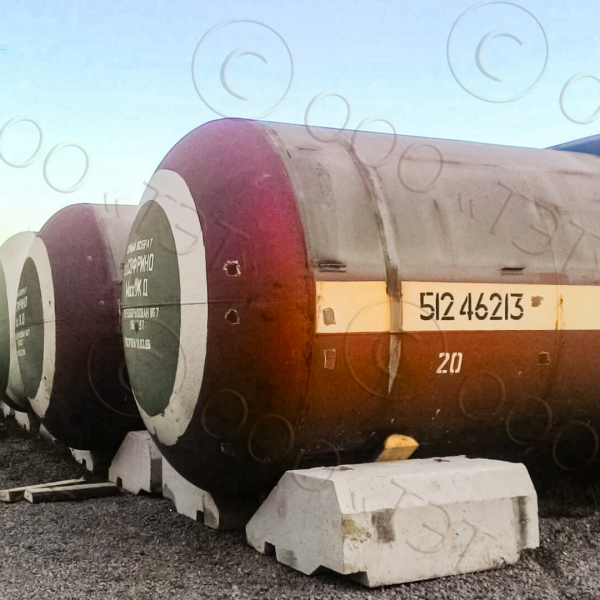
The tank itself – it is also called a boiler or tank – is attached to the frame of the tank car using metal ties. If the tank is dismantled (due to the design features of such wagons, it is relatively low-cost), then there are many options for using it for household needs, here are some of them:
For storing industrial water for irrigation or as a backup fire tank (open reservoirs for creating a water reserve in order to extinguish fires are now prohibited from being built and used by the norms of the Ministry of Emergency Situations and environmental legislation). Once in St. Petersburg, a water tower was built from three railway tanks to check water meters. The cost of such a product surprised everyone!
If the tank is raised to a height of 10-15 m above ground level, you will get a wonderful pressure tank for supplying drinking or industrial water – these can be seen in most provincial cities in the United States.
To store fuel and liquid fertilizers for the period of agricultural campaigns – a lot of them are used in remote areas of the middle belt and the south of Russia.
For storage of solutions and powder raw materials in the production of cosmetic and chemical products: vertically positioned containers occupy relatively small areas, while allowing to generate a large volume of raw materials.
For the manufacture of industrial wastewater treatment plants.
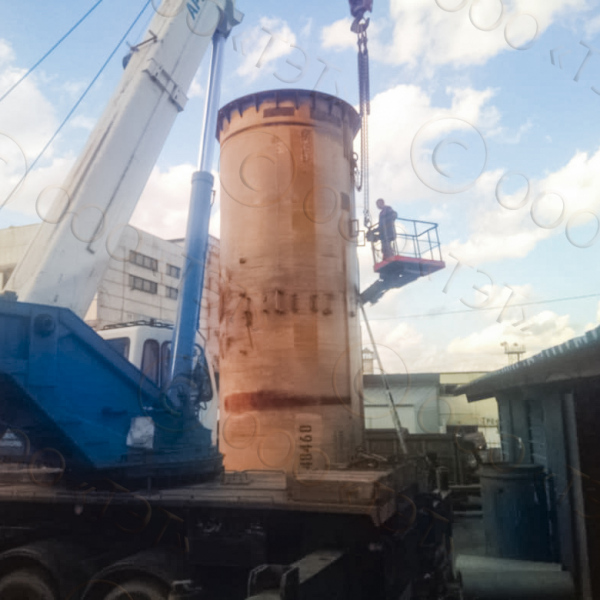
For the manufacture of silos of cement and asphalt concrete plants (PARA). From two or three tanks welded together and mounted vertically, an excellent, very durable (wall thickness of about 10 mm) silo is obtained.
For heating bitumen or for making furnaces.
And this is by no means a complete list of possible tank applications for various household needs, the possibility of their effective use depends only on your imagination, allowing you to save production space and significant financial resources.
Among other things, the use of expired containers has a pronounced environmental orientation, since recycling a tank car into scrap for further melting is a very energy-consuming and environmentally harmful process.
Technical characteristics of the tank:
- outer diameter: from 2.2 to 3.2 m
. - wall thickness: 10mm.
- Length: 10 m.
- number of necks: 1-2 pcs.
- the presence of thermal insulation (possible).
- the presence of supports / lodgements.
- the presence of stairs inside / outside
- possibility of installing a heater (electric / steam/ oil)
What distinguishes our products from analogues made at the factory from new steel or plastic:
- favorable price;
- delivery and manufacturing time (containers are usually available and there is no need to wait for the factory to purchase materials)
- the strength of the product (usually the thickness of the steel used to make a new container is no more than 5mm, and the railway tank, even after decommissioning, has a thickness of at least 10mm). All our tanks undergo thickness measurement before use.
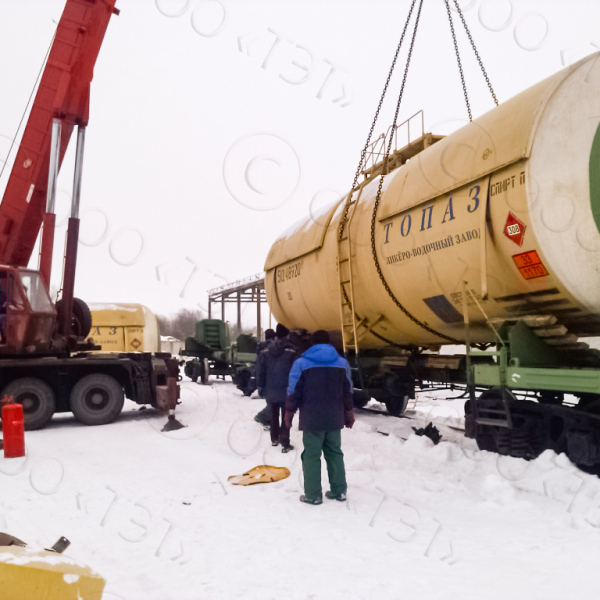
- convenience of delivery (the diameter of the tank is from 2.6 to 3.2 meters. The delivery of oversized cargo is difficult and expensive, but the tank can be shipped by rail as close to the customer as possible and dismantled at the nearest station, which allows you to save on delivery).
Who needs such tanks (tanks/boilers): Cement plants, construction contractors, farms, DNPs, and even private individuals are contacting us.
The containers can be installed vertically or horizontally. They are found in aboveground and underground versions.
All our tanks are washed and steamed before delivery, undergo thickness measurement before use, and have no visible or hidden defects.
Contact us for containers, we will deliver them by car and railway transport throughout Russia.